
- When was the last time your feedback truly changed someone’s behaviour for the better?
- Do you give feedback as a habit, or only when something goes wrong?
- How often does your feedback feel like a conversation?
red10 ‘s Piers Carter observes that giving feedback is one of the most talked-about skills in the workplace, yet one of the least mastered. Yet done well, it builds trust, strengthens relationships, and drives growth. Done poorly, it creates defensiveness and disengagement.
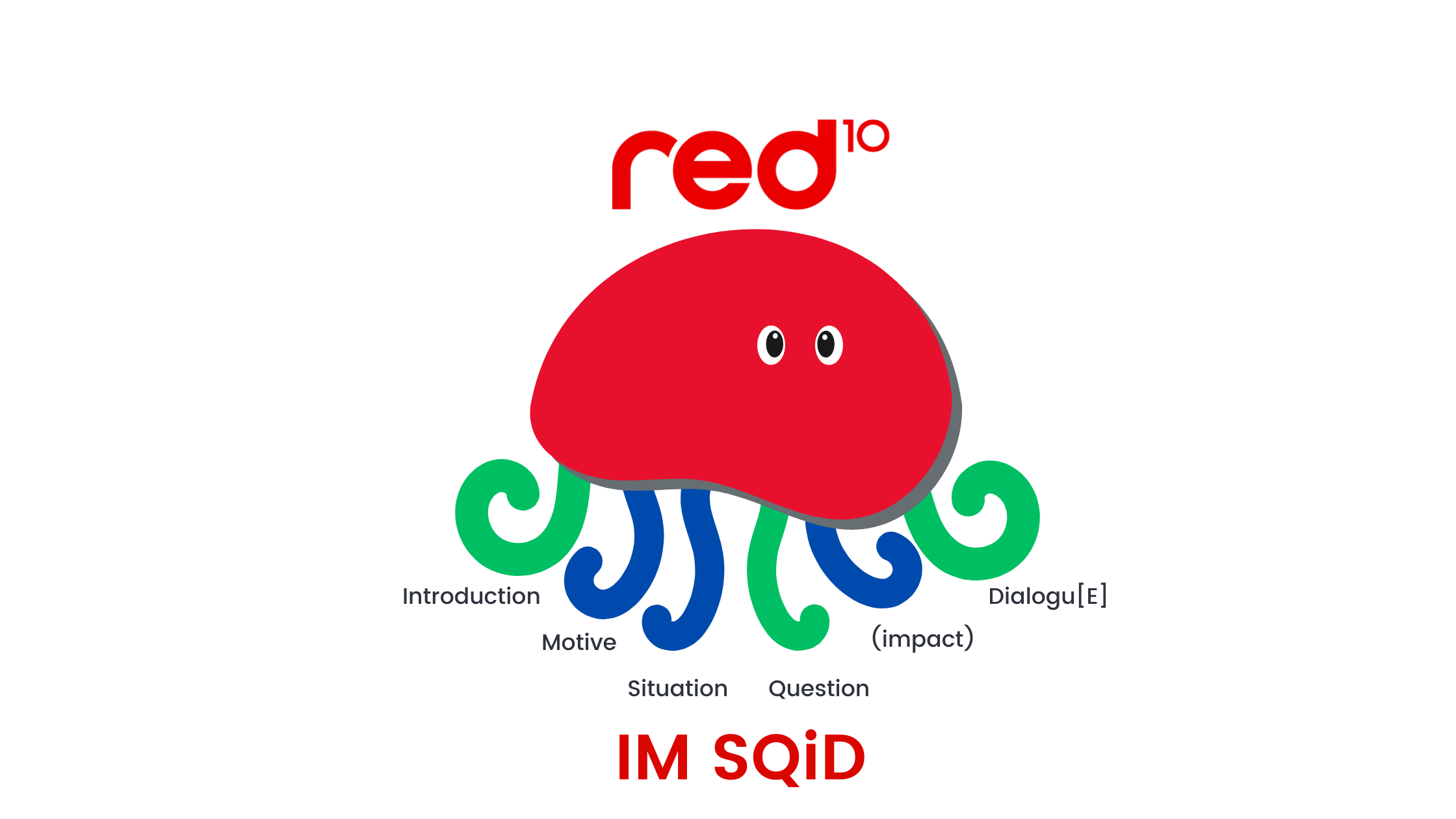
Here, Piers introduces red10 ‘s IMSQiD Feedback Model – a simple way to remember how to keep feedback clear, respectful, and actionable and most importantly, turn feedback into dialogue.
Make it a natural habit, not a rigid process
Two types of feedback:
- Motivational (positive): Recognizes what’s working and reinforces good behaviours.
- Developmental (constructive): Highlights what could be improved and how.
Timing matters
- Motivational feedback should be timely and past-focused — given as soon as possible after the action.
- Developmental feedback works best when future-focused — delivered just before someone can apply a change.
The IMSQiD Feedback Model
This model keeps feedback clear, respectful, and actionable — and most importantly, it turns feedback into dialogue. The lowercase i reminds you that the impact step is optional; use it only if needed.
I
Introduction
Create space for the conversation. Offer safety and choice without inviting a “no.”
Example:
M
Motive
Explain why you’re raising this. Keep it constructive and collaborative.
Examples:
“I value how we work together and want us to keep improving.”
“I want to make sure I’m supporting you in the best way I can.”
S
Situation
Describe what you observed. Stick to facts — no judgment.
Examples:
“During yesterday’s meeting, I noticed you interrupted a few team members.”
“I noticed the report wasn’t shared by the deadline we agreed.”
Q
Question
Invite their perspective. This is where dialogue begins.
Examples:
“Is this something you were aware of?”
“What are your thoughts on that?”
i –
Impact (optional)
D
Dialogue
This is the core. Listen, explore, and agree on next steps. Avoid monologues.
Principles for effective dialogue
1. Listen first, talk second
Give space for their perspective before responding.
2. Ask open, curious questions
Examples:
- “How do you see that situation?”
- “What’s your take on what happened?”
- “How do you think this affected others?”
3. Explore solutions together
Move toward constructive next steps.
Examples:
- “What could we do differently next time?”
- “Would it help to agree on a different approach?”
4. Stay collaborative, not confrontational
Use “we” language:
- “How can we make this work better for the team?”
5. Be adaptable
If they’re receptive, skip the impact step — dialogue may be enough.
6. Summarize and agree on next steps
Recap before ending:
- “So we’ve agreed that next time you’ll… and I’ll… Let’s check in after the next meeting.”
Always close positively
Acknowledge their openness:
“Thanks for talking this through with me. I really appreciate your openness.”
Receiving feedback well
Even if feedback isn’t delivered perfectly, you can make it useful:
- Listen first, then respond.
- Ask for examples if it’s vague.
- If it feels personal, ask: “What’s the impact on my work?”
- Request time if needed.
- If it’s all criticism, ask for ideas on improvement.
- Ask for something positive to build on.
Want to learn more?
Read our article on advanced conflict handling techniques
Why not run a red10 ‘s Advanced Conflict Handling Masterclass in your organisation.