
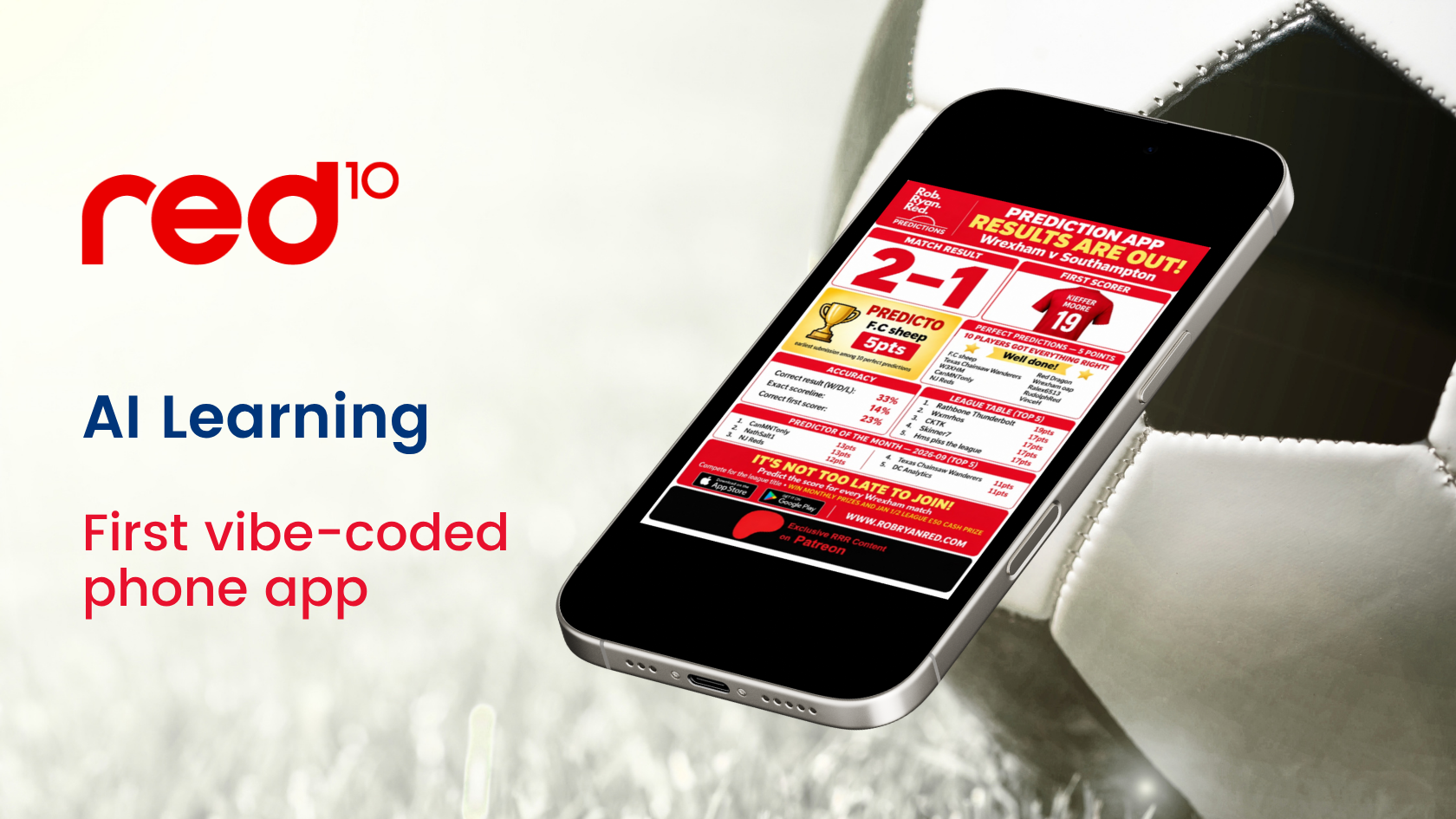
Would Apple really block an AI-built app?
What do you do when a rival out-builds you in nine days?
Should vibe-coding stay with just one person on your team?
Here, red10 ‘s Will Sudworth shares his learning from building and launching his first Phone app with Claude — and the surprising lessons it taught him.
Does your friendship group have an excuse to stay in touch?
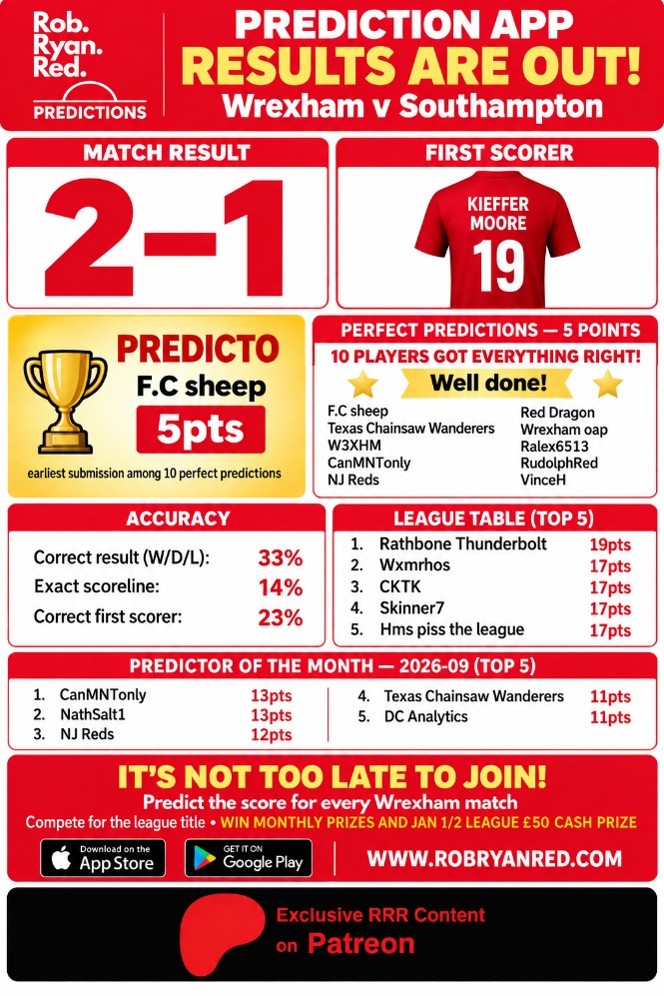
For years, my friends and I have run a game predicting our football team’s results: the score, Win-Draw-Lose, and the first scorer (sometimes “no-one”, sometimes “opponent own goal”). It’s been pure fun and bragging rights, though we did raise the stakes when we bought a shield to engrave the annual champion’s name on.
It’s given us the excuse we needed to keep a WhatsApp group alive and it’s led to a weekend away together most years.
Is your friendship group’s admin a pain?
Excel was a slog. My godson helped with some clever Excel formulas, but I still had to open my laptop to add everyone’s predictions and results, and I’d often let it pile up before trawling back through WhatsApp to catch up the spreadsheet.
“ChattyG”, as we call ChatGPT, was a real step forward. With a prompt that I iteratively developed and saved to a project, I could simply place WhatsApp screenshots into ChattyG and it would read them, calculate and maintain the league table for me.
Could a side project become a real app?
Watching our AI-embracing clients wrestle with the cost of tokens, I wondered if I could go further and build an actual app. I’d already vibe-coded tools inside red10 — invoicing, feedback reports — but never anything for the outside world.
red10 proudly sponsors upcoming journalists Nathan and Rich with their podcast for Wrexham AFC that features on the Hulu/Disney+ documentary Welcome to Wrexham. I set out to launch a free “Wrexham Predictions App” that might one day become a charity fundraiser.
When I shared the plan, someone told me “Apple won’t approve anything AI-created like that”. I’m glad I carried on: using Claude, both Apple and Google reviewed, approved and launched the app. Claude has since taken over the admin of building, testing and launching each new version too.
Search RobRyanRed Predictions on the App Store or Google Play if you’d like a look — all feedback welcome!
What happens when a rival shows up overnight?
We started better than expected — I’d hoped for 100 users. By September 2026, over 500 fans had signed up, inventing some brilliant team names along the way.
But just 9 days after launch, a rival Wrexham podcast released a free web app with a similar points system, and it quickly passed 700 users.
Two useful learnings:
- Our competitors can vibe-code too.
- To get the most out of creating a vibe-coded tool, you need to ensure that it is publicised, and that it’s intended users are engaged,
With Claude’s help, I added in a rhythm of engaging people in the app through:
A. Social media the day before the match, sharing predictions so far
B. Social media immediately after the match, congratulating specific individuals
C. Adding “notifications” into the app, to remind people to predict the day before, and hour before, and to check their results after the match
Are you ready for scale?
I wasn’t ready for 500 users, let alone a competitor — but five upgrades later, I’ve learned to scale the app and we’re now building in features fans suggest, including some excellent design work from Wrexham supporter Ty Howie in Canada.
Should everyone learn to vibe-code?
It seems to me that all our red10 clients are now confident with prompting and agents, yet vibe-coding still sits with a skilled few.
My belief is that the people closest to a task are usually the best people to vibe-code it — turning a repetitive job into a tool, spending tokens once so it can be reused many times over.
Spreading that skill more widely removes the bottleneck of “only the experts can automate this”, stops expertise getting lost in handoffs, and helps more people see what’s genuinely possible with AI.
Let’s democratise vibe-coding!
It’s why we’re now providing a 3-hour, up to 10-person practical Vibe-Coding Skills Masterclass.
Built in the same interactive, inclusive style you’re used to from red10 .
What repetitive task in your world is waiting to be vibe-coded?
More vibe-coding articles

AI vibe coding – use cases
• Have you heard of AI vibe-coding? • What [...]
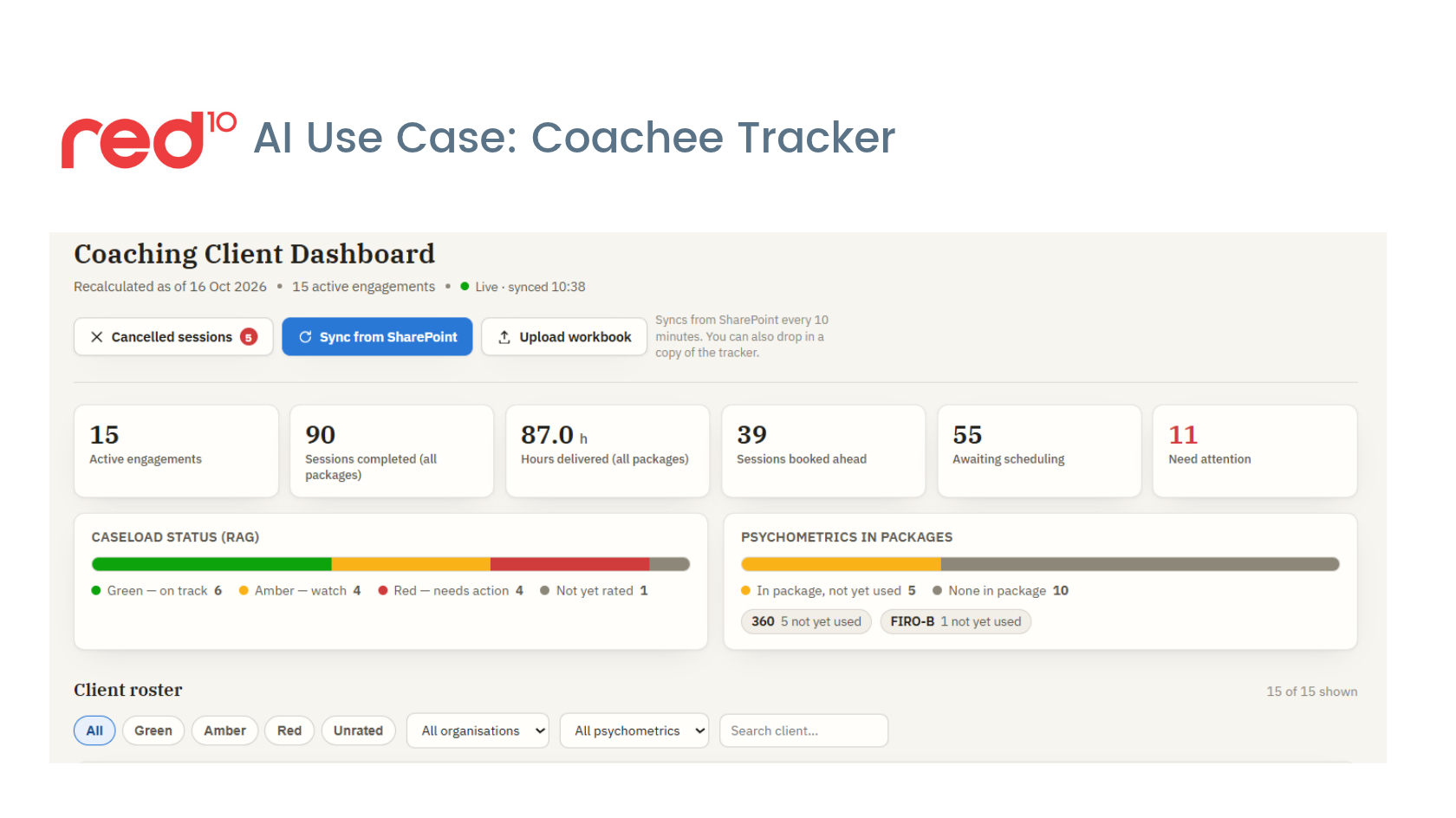
AI Learning: Coachee tracker
Who needs attention right now? What's slipping through the [...]
AI Learning: From app to skill – building Decky
What if the flipcharts typed themselves up? Why does [...]
AI Learning: 1st Vibe-Coded Phone App
Would Apple really block an AI-built app? What do [...]
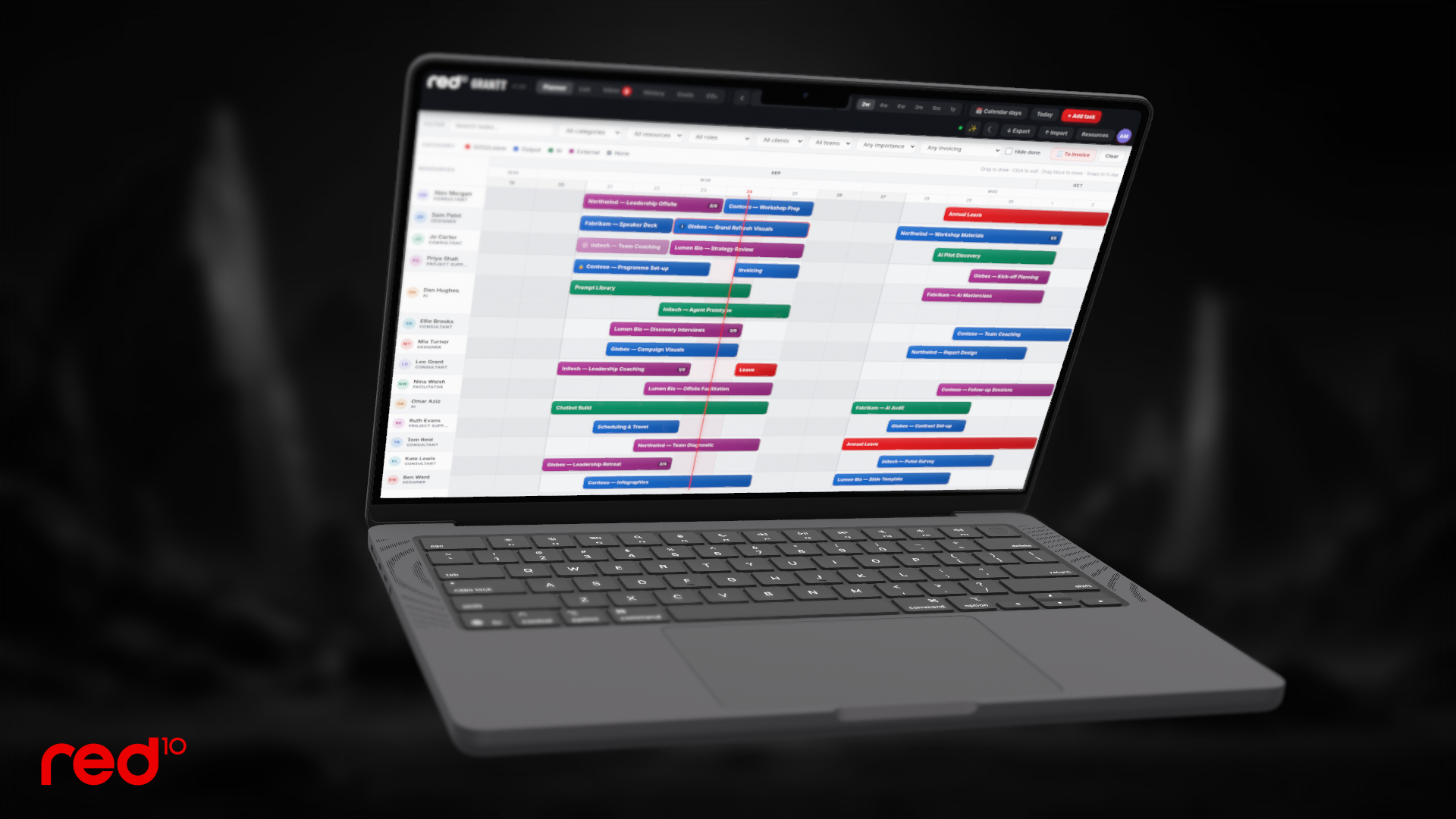
Vibe-Coding our own planning tool
Why pay for software that almost fits how you [...]
Vibe coding masterclass
Heard of vibe-coding but don’t know where to start? [...]