

Have you “Vibe Coded” with AI, yet?
Have you engaged an AI teacher or a “Reverse-mentor”?
What have you learnt from AI tools, so far?
Here, red10 ‘s Will Sudworth shares one of his “AI Use Cases” as part of engaging in this new era.
Do you share AI Use Cases?
We’ve noticed our clients running “AI Use Case” sessions, where each person shares one real example to inspire and encourage others. I thought I’d share one now, too.
Why was AI needed?
We’ve kept red10 slim, so when one of our admins needed to take unexpected time away for an extended period, our wider team agreed to pitch in to support where they can. I offered to take the client invoices.
I’ve been wondering if we could use AI to automate more, so I wondered if I could use AI Vibe Coding, to get the job done and also set it up so that it would take less time for all of us from now on.
What is AI Vibe Coding?
ChatGPT tells me that Vibe Coding is when you explain what you want and why, in natural language to a GenAI tool like co-pilot and it builds you code, ie you explain the “vibe”, but you don’t explain every step to get you there.
For me, Vibe Coding is more than that: I tell it the what and why, without needing to know the coding language (AI seems to love a coding language called Python), and I just test whether the code works and when it doesn’t (spoiler: it often doesn’t work first time) then I ask AI to fix the issue or improve the code in iteration until it passes my tests. Often I learn what I really wanted and then need it to re-code it, in order to achieve that.
I LOVE vibe coding. I used to code in C++ and PERL, but I haven’t coded in over 30 years. I don’t want to have to learn the preciseness of Python, where one misplaced indent breaks all of the code, yet I do want to get the results from coding. Vibe coding gives me the best of both worlds.
How did you learn to Vibe?
In the earliest days of the new AI tools, a client inspired me. They set-up what they called “Reverse mentoring” where they arranged a weekly slot with one of their AI staff, so that they could learn AI, hands-on. I saw them switch-up several gears, really quickly.
In the early days of AI, when GenAI systems like Co-pilot were not secure for small businesses – meaning that we couldn’t put client data into them – one of my coachees started experimenting with LM Studio, and encouraged me to use it too. LM Studio sits on your laptop, with no data going in or out of the network. I saw that coachee make huge strides forward too, and wanted to do the same.
I decided that I would engage an AI Teacher too, and make them available to everyone in red10
.
I’d met Gareth through my love of Wrexham football club. Originally from North Wales yet now in a software company in Philadelphia, I found that he explained AI in a way that worked well for me.
With Gareth’s help, I’ve:
- Set-up a secure Co-pilot and ChatGPT
- Installed Anaconda on my laptop so that I can run AI created python scripts
- So far…created many Python scripts and two GUIs (graphic user interfaces) that control them.
What did automating invoicing require?
We use a tool called Xero for invoicing. ChatGPT quickly encouraged me to connect my Python environment directly to Xero using their Xero API. APIs give you a way of interacting directly with the contents of that application.
Without ChatGPT, I very much doubt that:
I would have found the hidden developer portal and executed the sequence of instructions and approvals to allow me into Xero, through setting-up what Xero calls scopes.
I’d have known what Xero needed me to provide so that it could write the invoice: it’s very particular in need invoice types, account codes and tax codes.
Most of our invoices are created from spreadsheets that enable us to make cost proposals and then track the delivery. Currently our admin team created the Xero invoice through copy and paste and then working out what account codes and tax codes to apply. This was fairly straightforward for a Python script to automate using APIs. There was a surprising big win to come…
What was the biggest win?
The biggest win was when automating invoices for the one client we have that requires receipts to be attached.
The office team used to have to:
- Check that consultants had submitted their receipts – often photos but sometimes scanned PDFs
- Download them, and save them to the right folder
- Create the invoice, detailing the receipts and the amounts for each
- Upload the photos/PDFs to attach them to the invoice.
ChatGPT suggested that we could be much more efficient: we could find the original expense receipt in Xero from the consultant with the details they had written, and then pass both their details and cost and photo/PDF straight through to the invoice.
No need for downloading, saving and then uploading.
It was quite complicated to code and so took maybe a dozen ChatGPT iterations (my experience is that you do have to be patient with AI) yet we got it working.
Just this step alone will save us lots of admin time.
What have I learnt, so far?
1 – “The Get & Yet” of Growth mindset is key
The gratitude mindset of
“How fortunate am I, to live at a time when I get to play with all these new tools?”
and
The patience and curiosity of
“I can’t get this ChatGPT code to work, yet”
red10 ‘s Lisa Smith has a wonderful 5min article on Growth Mindset here:
2 – There’s no need to learn Python.
Rather, you just need to break the task down into a sequence and then write structured instructions, then thoroughly test and iterate until the code passes the tests.
3 – An AI teacher helps get you started. That’s needed.
4 – It’s hard work to move from you using the tools you developed yourself, to the point where they are “in production” for others to use.
5 – I need to try Claude for code, my AI teacher tells me – apparently, it’s better at coding than ChatGPT.
6 – Vibe coding took the process back to what AI gurus call “first principles”.
I’ve been learning recently that my 5.2 version of ChatGPT has “agent thinking” in it, that helped to do this in a way that previous versions of AI didn’t do.
So what?
Could your team benefit from “AI Use Case” sharing?
Would your department benefit from our Growth Mindset skills class as part of encouraging AI use?
What tips do you have for Will, for him to try next?

AI vibe coding – use cases
• Have you heard of AI vibe-coding? • What [...]
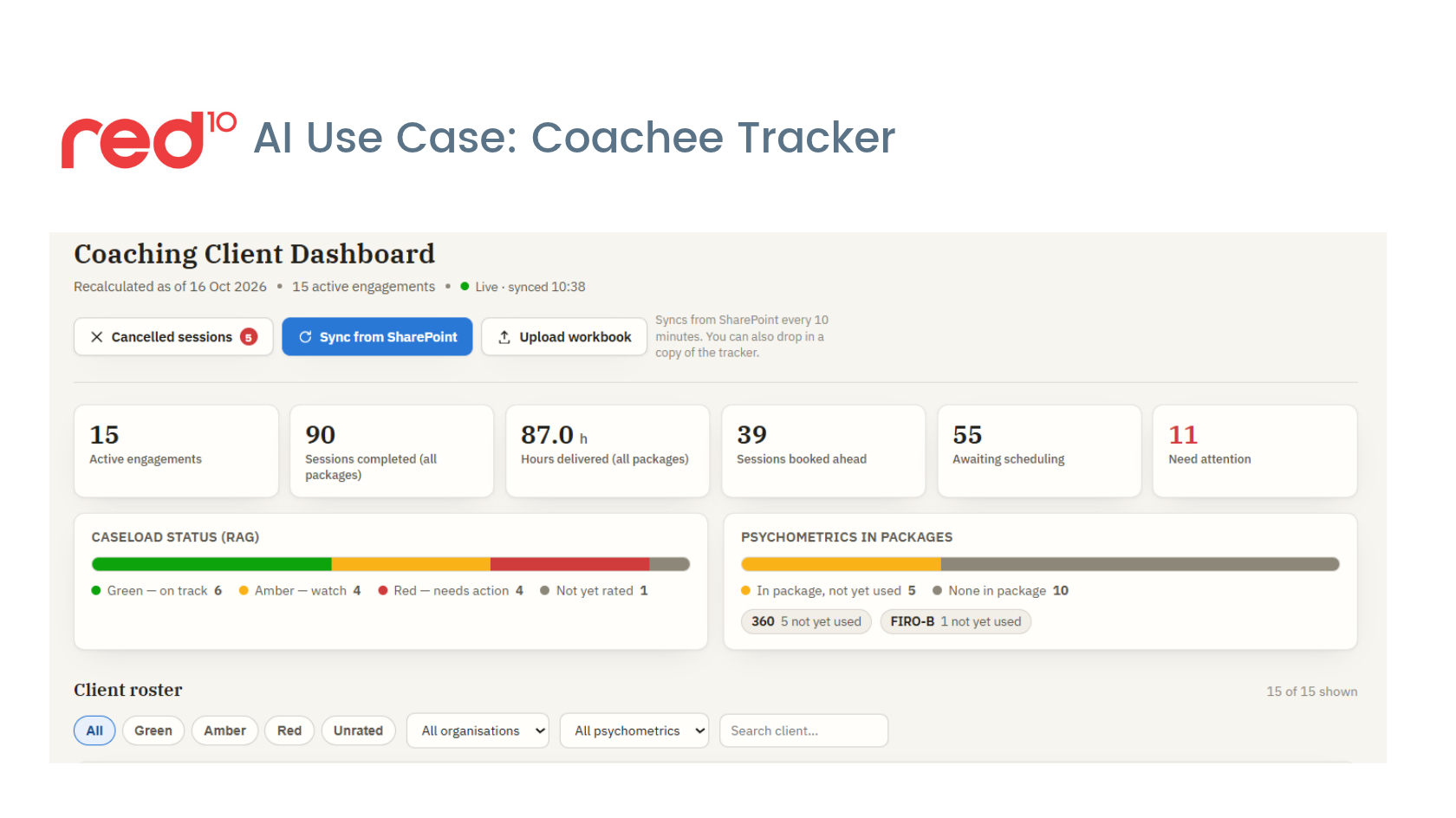
AI Learning: Coachee tracker
Who needs attention right now? What's slipping through the [...]

AI Learning: From app to skill – building Decky
What if the flipcharts typed themselves up? Why does [...]
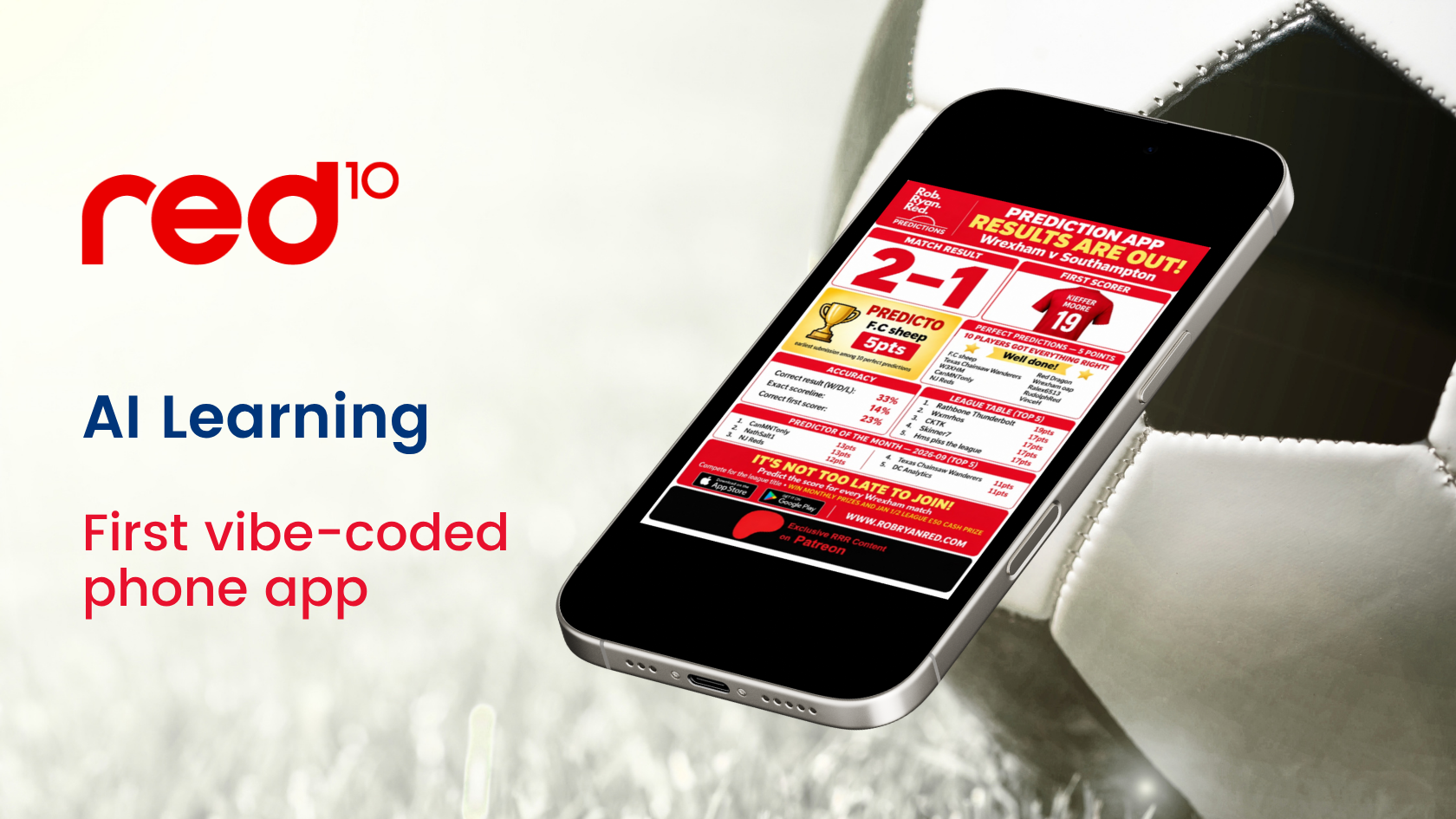
AI Learning: 1st Vibe-Coded Phone App
Would Apple really block an AI-built app? What do [...]
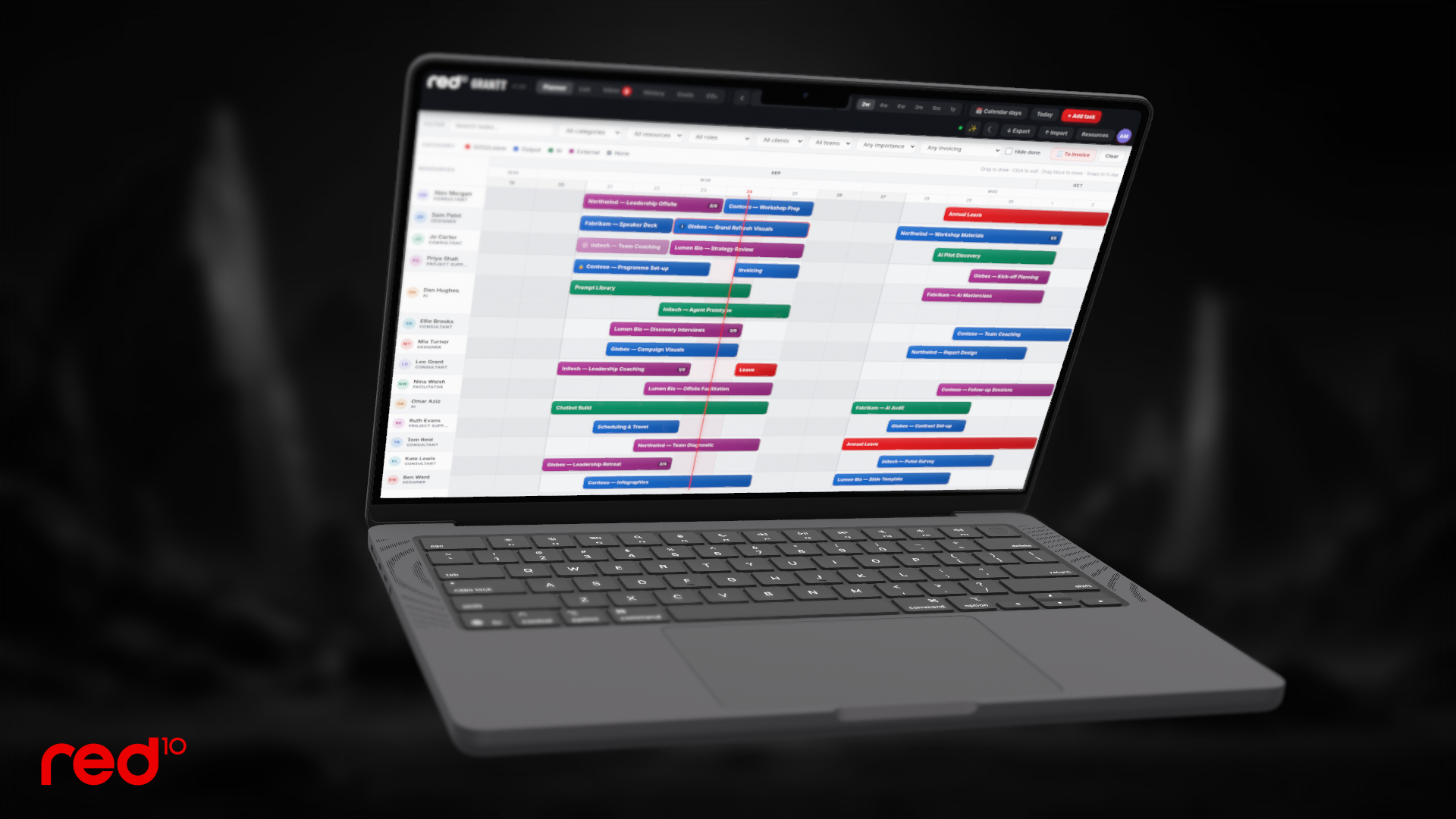
Vibe-Coding our own planning tool
Why pay for software that almost fits how you [...]
Vibe coding masterclass
Heard of vibe-coding but don’t know where to start? [...]