

Can you use code without knowing how to write it from scratch?
Is prompting becoming one of the most valuable workplace skills?
What becomes possible when you apply a growth mindset to problem-solving?
Here, red10 ‘s Senior Administrator, Karen Hyde, reflects on how AI, lots of curiosity and better thinking is turning non-coders into problem-solvers and describes her first “vibe coding” experience.
Me? A coder?
Until very recently, I would never have described myself as a coder.
To me, coding was a highly specialist skill; something only very clever, very technical people could do.
A few years ago, when working in an IT department of a large pharmaceutical organisation, I used to walk past architects and developers peering at huge screens filled with long strings of luminous green text. I remember thinking how incredibly clever they all were. And they are incredibly clever. No doubt about that!
But here’s what surprised me: being clever at coding isn’t the same thing as being able to use code.
Do I know what I need and can I explain it?
Instead of asking, “Can I code?”, the more useful question became:
“Can I explain what I want clearly?”
With tools like ChatGPT doing much of the heavy lifting, what’s really required from the human is: Curiosity, a willingness to learn and, crucially, a good explanation in the prompt.
If you can dream it…
While working on a recent client project, I was faced with a familiar challenge.
I needed to take information from 22 separate Excel sheets, calculate and summarise the data, and then turn it into a team profile visual and create a presentation pack for each of the 22 teams.
Doing this manually would have taken close to a full working week: sifting through data, ordering values from high to low, and repeating the same steps across multiple headings again and again.
It was repetitive, time-consuming, and frankly not the best use of anyone’s time.
Rather than doing the work manually, I dreamed of an app that would handle everything automatically: process the data, turn it into a visual format, and create all the materials the teams needed.
So, encouraged by Will, I tried something different.
From problem to Python
I don’t suddenly know how to write “proper” code.
I can recognise bits of HTML and understand Python at a basic level, but I still wouldn’t be able to sit down and write an end-to-end script on my own.
At that stage, the hardest part wasn’t technical at all.
It was cognitive.
Prompting is a superpower
Before a single line of code could exist, I had to:
- Understand the problem clearly
- Break it down into logical steps
- Decide what the output should look like
- Explain all of that to an AI in a way it could act on
This was less about code and more about thinking. The quality of the result depended entirely on the quality of the thinking behind it.
That meant clearly describing the task to AI, giving it enough context, showing it where to find the data, and explaining exactly what needed to happen to that information to get the result.
Garbage in, garbage out still applies
One important lesson quickly became clear: AI doesn’t fix bad data.
My data needed to be clean, consistent, and well structured. Multiple formats can work, but the more clearly you think about your data before you begin, the smoother everything becomes later on.
This wasn’t about writing clever code. It was about planning yet the human still needs to give the direction and context.
Persistence pays off
Sometimes my explanation wasn’t detailed enough, meaning the output wasn’t right. When that happened, I had to go back, refine the prompt, explain what had gone wrong, and ask AI to generate another version.
Did it work straight away? No!
There were lots of iterations. Lots of testing and plenty of moments when it felt like tweaking the process was taking longer than just doing it manually.
But this is where a growth mindset makes all the difference.
Instead of thinking, “I’m not technical enough for this,” I learned to think:
“What do I need to explain better?”
And in the end, it was absolutely worth it.
The payoff
What would have before taken days of repetitive manual work is now an automated tool called “SAM”.
Not because I suddenly became a software developer, but because I learned to ask better questions, think more systematically and trust myself to learn as I went. So no. You don’t have to be a coder to be a coder. You just need curiosity, persistence, and the confidence to start.
Gratitude — and what comes next
I also owe a huge thank you to red10 ‘s Managing Director, Will Sudworth, who encouraged me to be brave, to learn, and simply to have a go. He generously gave up his time to help me install the right environments, get Conda working, and set me off on this coding journey.
More importantly, he made it feel safe to experiment, to ask questions, and not to know everything straight away. That confidence, that permission to try, made all the difference.
And now I find myself wondering: if this was possible, what might I try next?
AI vibe coding – use cases
• Have you heard of AI vibe-coding? • What [...]
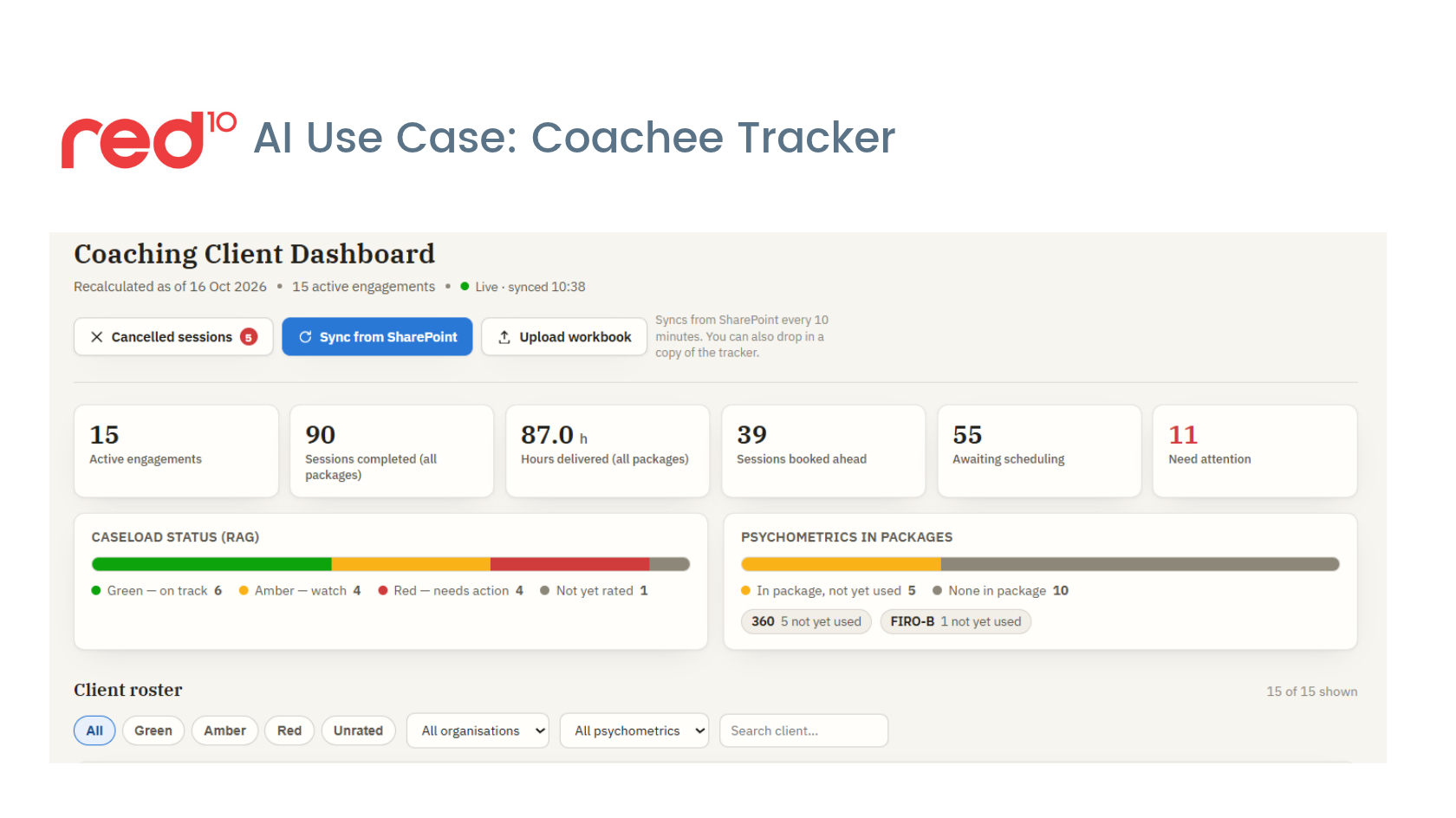
AI Learning: Coachee tracker
Who needs attention right now? What's slipping through the [...]
AI Learning: From app to skill – building Decky
What if the flipcharts typed themselves up? Why does [...]
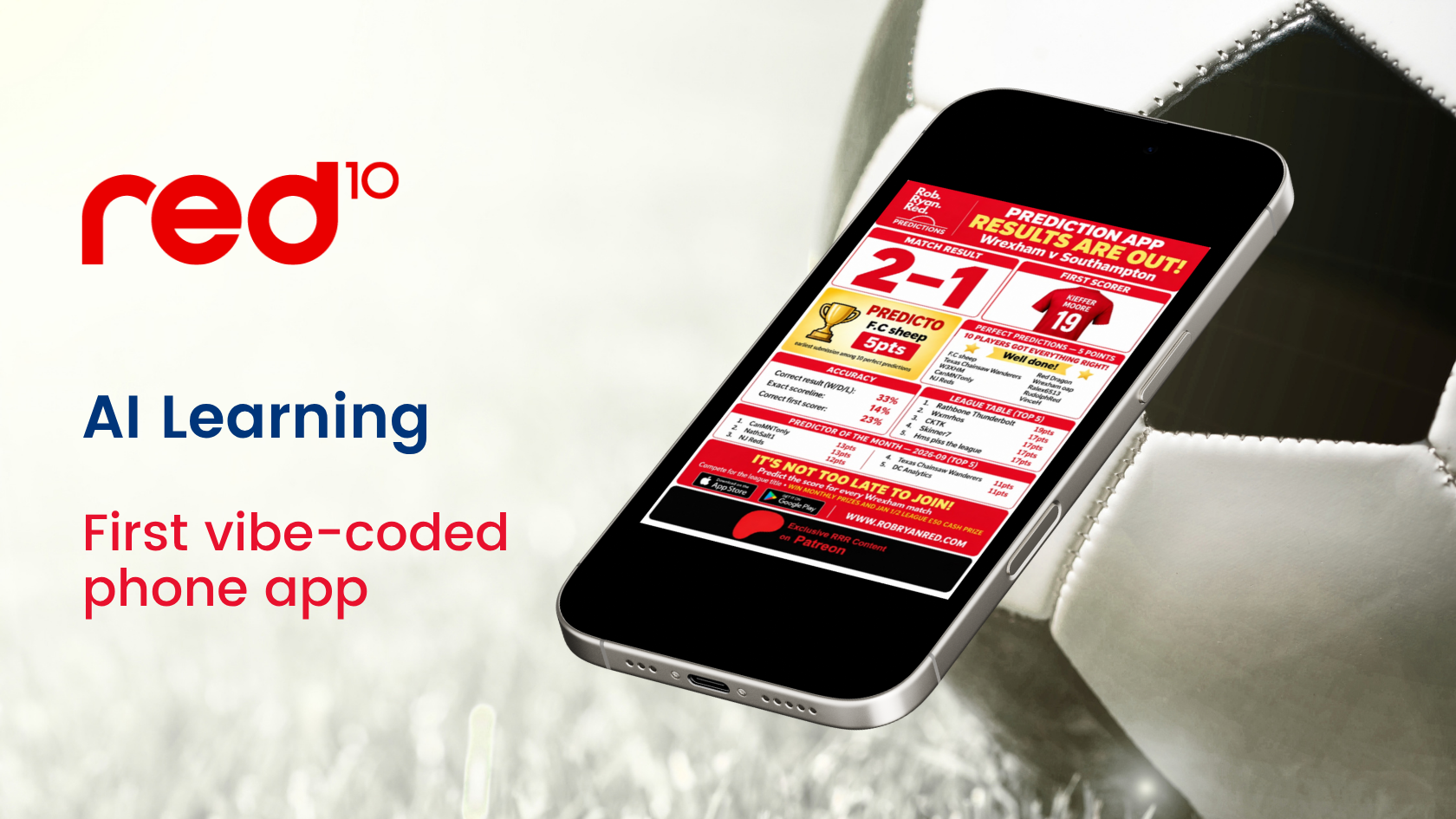
AI Learning: 1st Vibe-Coded Phone App
Would Apple really block an AI-built app? What do [...]
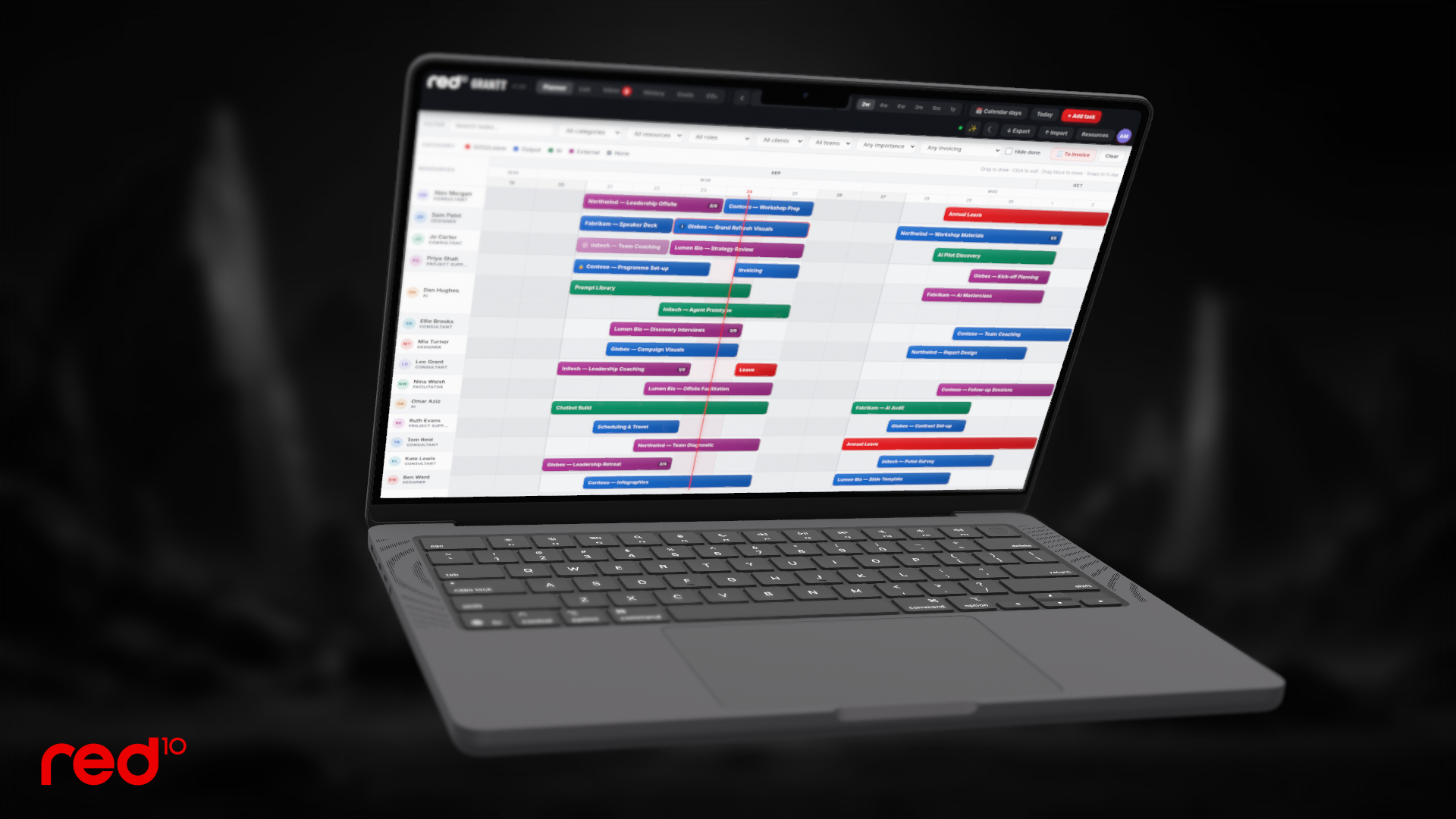
Vibe-Coding our own planning tool
Why pay for software that almost fits how you [...]
Vibe coding masterclass
Heard of vibe-coding but don’t know where to start? [...]