

What changes when AI reshapes competition?
How can leaders redesign their organisations for speed and scale?
What mindset lets humans thrive when machines do more of the work?
Here, red10 ‘s Will Sudworth, with AI-assistance, explores Competing in the Age of AI by Marco Iansiti and Karim R. Lakhani — a book that argues that AI isn’t merely another technology trend. Instead, it transforms the operating system of organisations.
The authors, both Harvard professors, describe a shift from traditional, process-driven organisations to AI-centred, network-orchestrated systems. These new organisations operate without the usual friction of human-centred workflows, unlocking unprecedented scale, speed, and adaptability.
They outline a simple yet profound shift:
Companies no longer compete through people running processes. They compete through algorithms orchestrating networks.
For leaders, this pushes strategic questions to the surface:
- What activities should humans still do?
- Where do algorithms outperform us?
- How do we ensure AI augments — not overwhelms — our organisational culture?
Why are AI-centric organisations different?
According to Iansiti and Lakhani, organisations built around AI have three characteristics:
- 1
Zero marginal cost of learning
Traditional organisations scale linearly — hire more people, add more processes.
AI organisations scale exponentially — once the algorithm learns, it can replicate outcomes globally at almost no cost. - 2
Boundaryless growth
Examples like Amazon, Ant Financial, and Google demonstrate that once decisions and operations run through algorithms, physical constraints fade.
Distribution becomes digital. Services become modular.
Organisations aren’t limited by geography, time zones, or even industries. - 3
Rapid, continual improvement
Feedback loops — the lifeblood of learning — become immediate.
Every interaction improves the model.
Every model improvement strengthens the competitive advantage.
For red10 ‘s clients, the takeaway is energising: AI-centric organisations behave more like living systems than machines. They evolve. Continuously.
What is the leader’s new role?
The authors emphasise that leadership doesn’t disappear — it transforms.
At red10 , we often help teams navigate similar transitions:
- How to retain humanity while embracing automation
- How to keep teams cohesive when algorithms change workflows
- How to build confidence when the system learns faster than the people inside it
How do organisations prepare for an AI future?
Iansiti and Lakhani highlight three practical shifts:
These are exactly the collaboratives red10 supports: psychologically safe, curious, agile, and aligned.
What can we learn as individuals?
AI-centred competition isn’t only about organisations — it’s about us.
The book suggests three personal development shifts:
Only got 5-mins?
Listen to the Harvard Business Review IdeaCast episode exploring inner conflict and self-leadership:
Got 1 hour or prefer video?
Sounds True / Insights at the Edge full-length interview
AI vibe coding – use cases
• Have you heard of AI vibe-coding? • What [...]
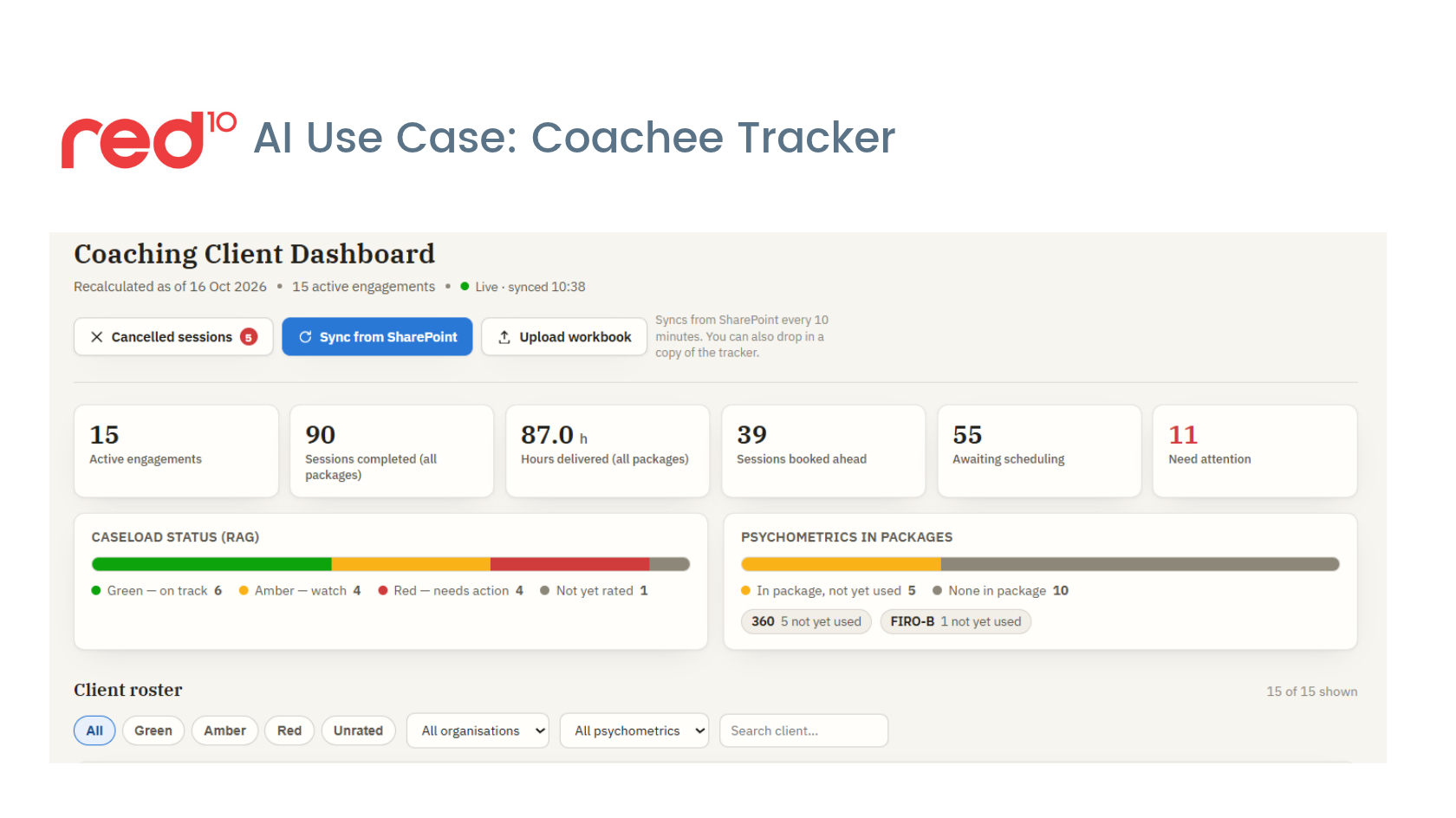
AI Learning: Coachee tracker
Who needs attention right now? What's slipping through the [...]
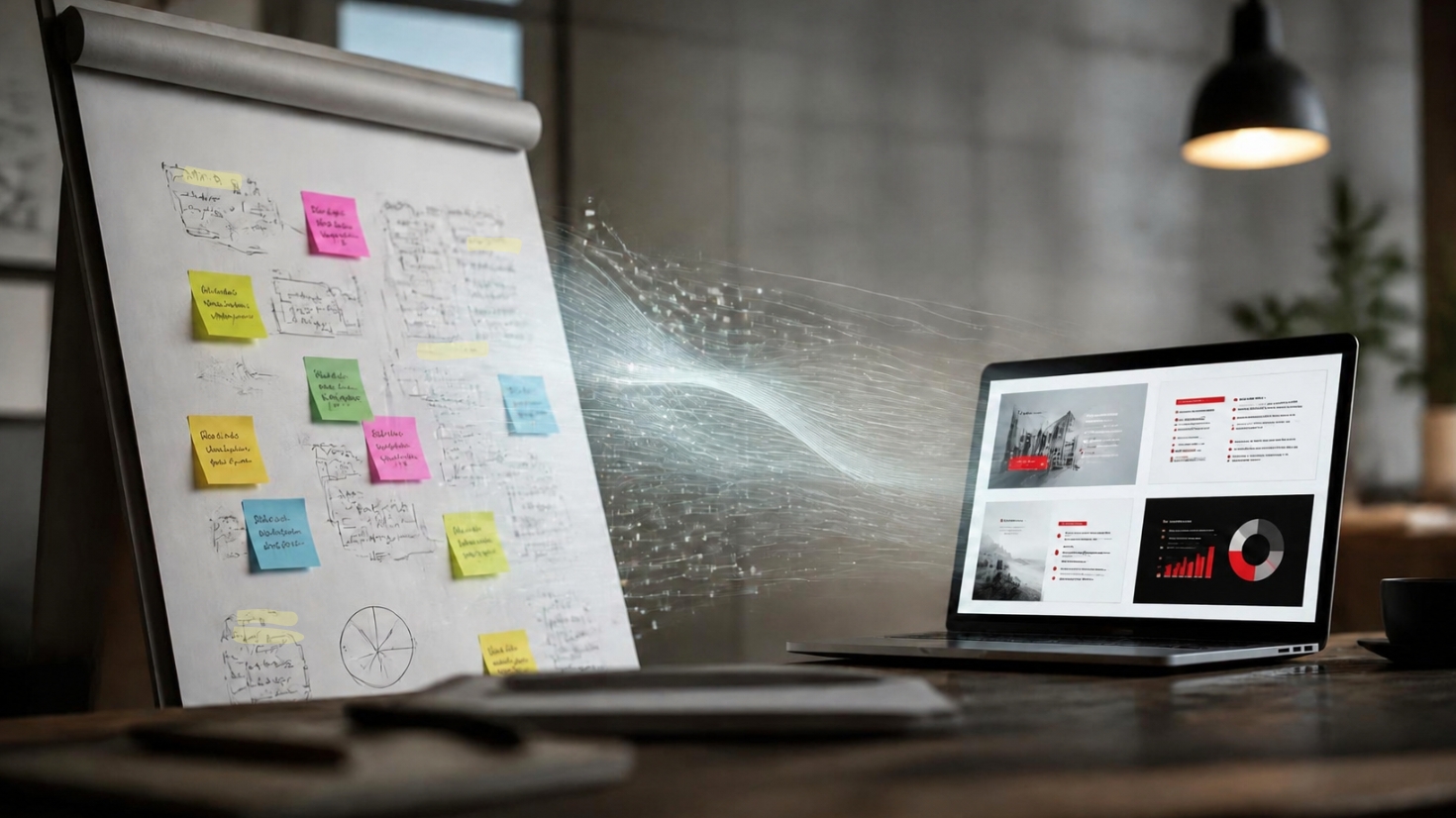
AI Learning: From app to skill – building Decky
What if the flipcharts typed themselves up? Why does [...]

AI Learning: 1st Vibe-Coded Phone App
Would Apple really block an AI-built app? What do [...]
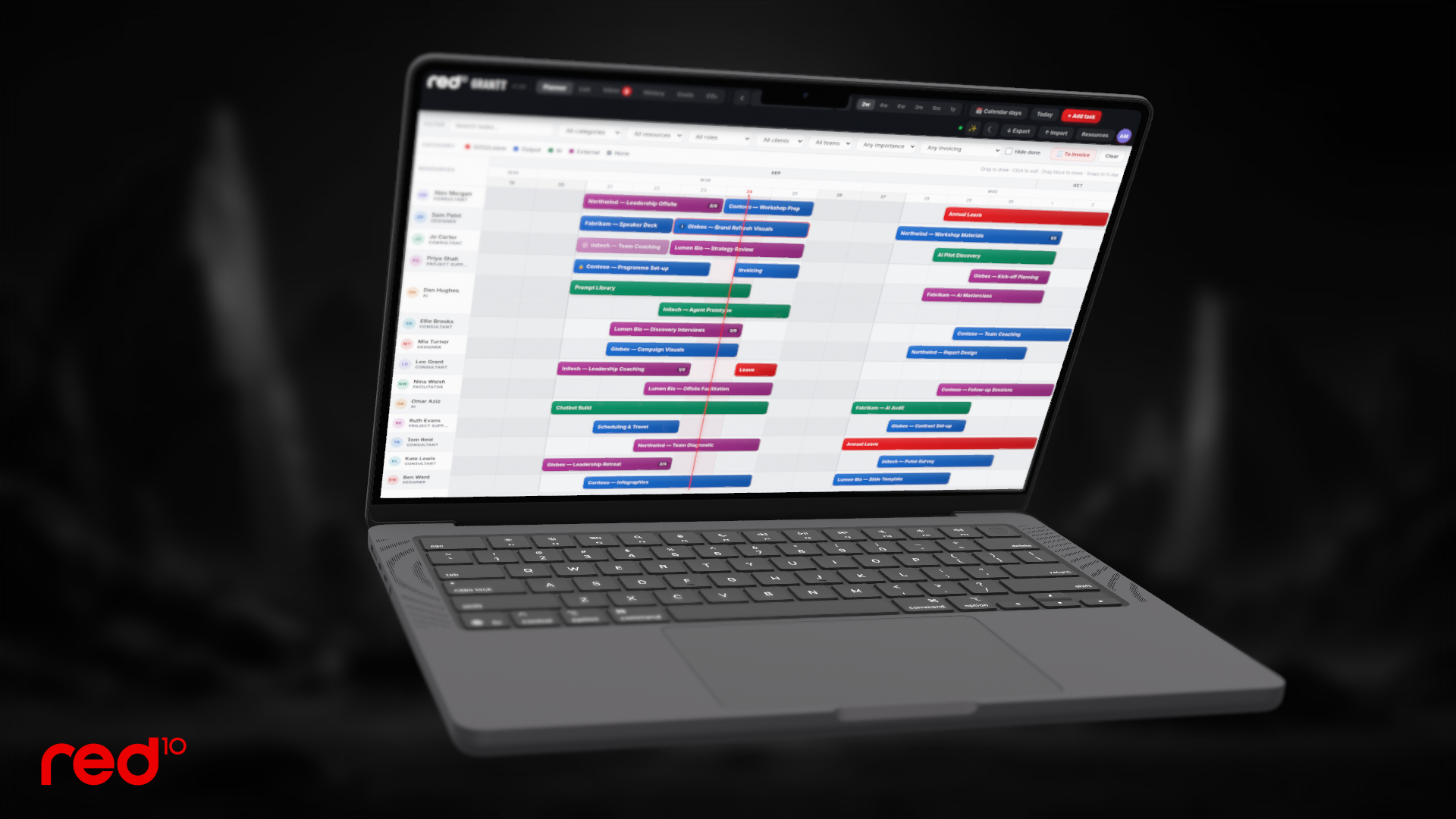
Vibe-Coding our own planning tool
Why pay for software that almost fits how you [...]
Vibe coding masterclass
Heard of vibe-coding but don’t know where to start? [...]