
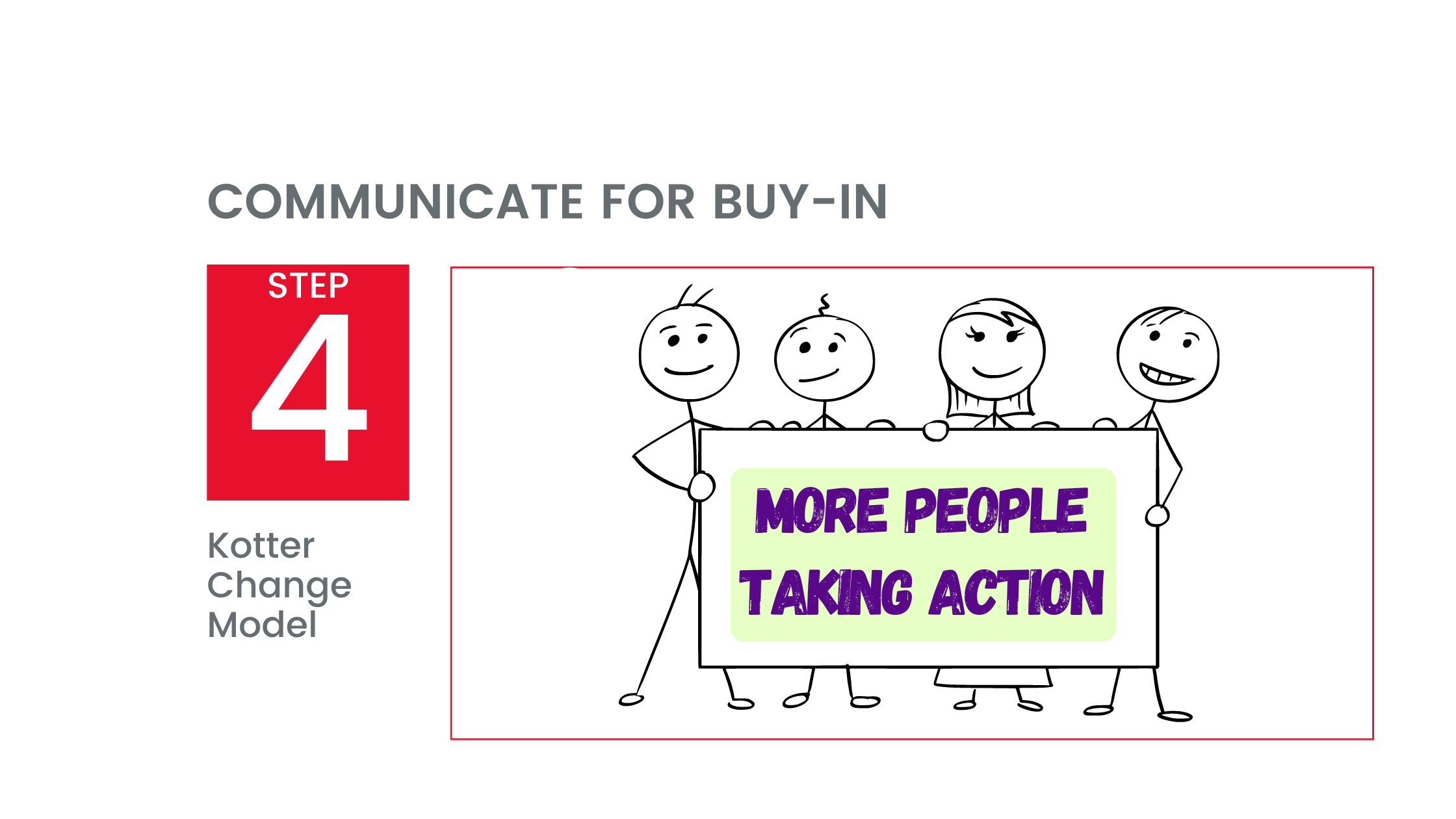
- What does Change-Guru Kotter mean by “Communicate for Buy In”?
- What are the key steps?
- What is good practice?
Here, red10 ‘s Paul Gaskell explains John Kotter’s fourth step of 8 in the widely used Kotter Change Leadership Model.

This article is all about Kotter’s Step Four
This piece explores step four – what do we mean by Communicate for Buy-in?
Before you start on this step, it’s important that you have established how urgent the change is, built the right guiding team, and have the right vision in place.
Read about step one here, step two here and step three here.
What is communicate for buy-in?
Once you have the vision and the strategies identified, it is super important to communicate them widely.
This communication needs to improve understanding of what the change is while connecting with the audience emotionally. The intent is to get as many people as possible on board and ready to act in support of the change. It’s not just what Kotter calls ‘data transfer’, it needs to address real responses that question the need for the change.
Why is it so important?
A communication approach that lacks clarity (from the vision step) and/or doesn’t acknowledge people’s emotions and heartfelt concerns about the change can undermine any transformation.
A common mistake that leaders make is to have actions that do not match their words. An approach that has the actions of leaders misaligned with the messages about change will not succeed.
E.g. if you want an inclusive culture then you need to have leadership meetings that actually include multiple levels of staff, rather than having company meetings that are highly structured with input from just a few senior leaders.
What does Kotter say is needed to create communication that will work?
- Tune into how people are feeling. Do your homework before communicating. Speak to the anxieties, the anger and the mistrust that this change might have brought to the fore.
- Heartfelt messages from real human beings will help.
- Make sure the communication gets through – use the most effective channels to get the messages seen. There are so many communication channels, it will be easy for your message to get lost.
- Match words and deeds – you cannot act in a way that undermines what you have said about how the change should unfold.
What doesn’t work?
- Under communicating
- Templated communications that suggest you are transferring information
- Fostering cynicism by not walking the talk
What is good practice in communicating for buy-in?
Communicate the vision and the strategy while understanding the array of emotions and objections that may lie in front of you.
Narratives that Kotter shares to illustrate the best principles of Communicating for Buy In:
- Preparing for Q and A:
- My Portal
- The Screen Saver
As we’ve previously highlighted, there is some overlap between the steps – while developing the vision, it’s so helpful to decide how you can communicate that vision effectively.
Summary
Communicating for Buy In is easier if you understand the prevailing emotions, the options for moving forward, and the language require to engage with those affected and taking on the emotions of those affected.
if you are interested in finding out more about this approach to changes, please get in touch. Are you interested in reading about step five?